This website uses cookies. By continuing to use this
website, you agree to the use of cookies.
More info here
Accept Cookies

Thaniya Plaza: Heritage Meets Modernity
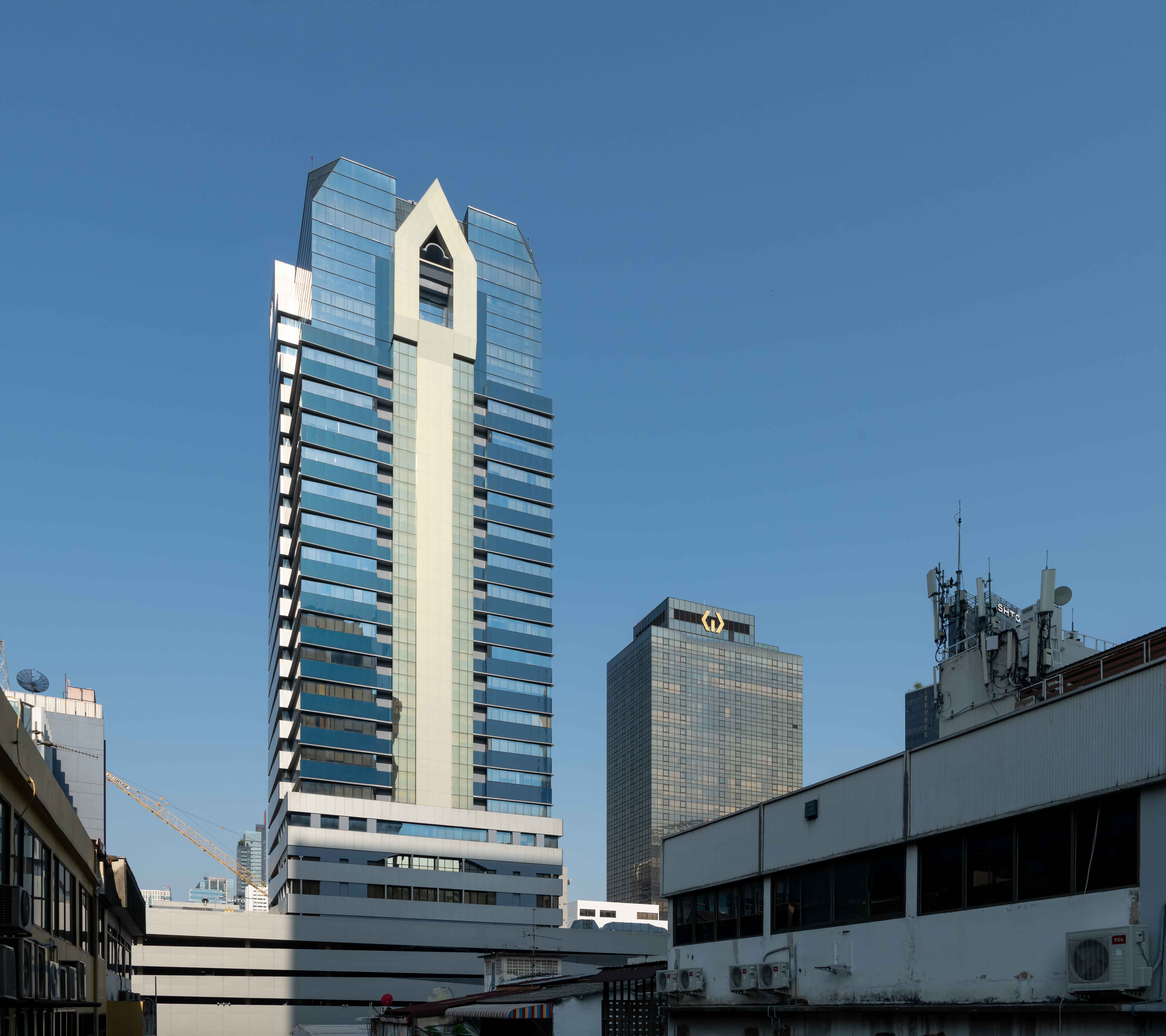
Thaniya's first building was constructed around 1970 through a collaboration between Obayashi and Sumitomo Realty of Japan. Several years later, a second building was added to the complex.
Architectural Identity

The original building's façade showcased exposed precast concrete which was a distinctive yet minimalist expression of character. In contrast, the second building adopted a different architectural vocabulary, resulting in a visual disconnect between the two structures.
Renovation Strategy


The façade renovation strategy centered on preservation rather than replacement. Essential architectural elements from both buildings were retained and thoughtfully enhanced to reflect contemporary sensibilities without excessive intervention. Most critically, the unification of the architectural language created visual harmony that clearly communicated these structures as parts of a singular, cohesive project.
Reimagining Circulation



Successful retail environments depend fundamentally on intuitive pedestrian flow. Internal layouts and vertical connections underwent complete redesign to establish seamless continuity across all floors. This eliminates interruptions in the customer journey, improving circulation patterns and creating comprehensive spatial coverage. The result is an engaging, enjoyable experience that guides visitors naturally throughout the complex without creating dead zones or confusing navigation.
Design Resolution
The renovation honors the original architectural character while embracing contemporary innovation. As requested by the ownership, the building's heritage identity remains intact as an enduring landmark. Modern design interventions integrate carefully and appropriately, neither overwhelming the original character nor appearing timid. The outcome is a shopping destination that feels both familiar and refreshingly contemporary with its distinctive identity bridging past and present.





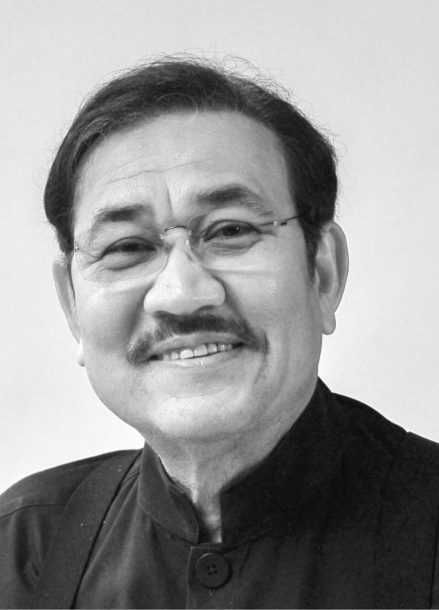
In 1980, Prabhakorn received his Bachelor of Architecture degree from Chulalongkorn University. He continued his education at the Catholic University of America in Washington DC, where he graduated with a Master of Architecture degree in 1984. Whilst in Washington DC, Prabhakorn worked at Robert Schwinn & Associates in Maryland before returning to Thailand and joining A49 in 1985. At A49, he has been responsible for a wide range of projects ranging from mega complexes and high-rise buildings to houses. Most of these are located in Thailand, whilst others are located in other countries in the region, including: China, Malaysia, Singapore and Vietnam. His work has also extended outside that region, for example, to the United Arab Emirates and India. All add breadth to the A49 portfolio of work. His main role has been to establish major policies, design concepts and strategic planning initiatives. He was appointed as President of Architects49 Phuket in 2005 and President of Architects49 International in 2006.
Prabhakorn actively served the Association of Siamese Architects (ASA) as its Head of Public Relations from 1992 to 1994, as its Vice President of Foreign Affairs from 1995 to 1997, and as the President of ASA during 2002-2004. He has also participated in many subcommittees for both the ASA and the Architect Council of Thailand (ACT). He is an active Council Member of the ACT, with his present duties for them extending into 2018. He has been an Honorary member of the Japan Institute of Architects (JIA) since 2003.
Prabhakorn has been a key member of A49 since its foundation, and has the honour of being trusted by Nithi Sthapitanonda (the Founder of A49) to be President and Managing Director of 49Group.
In 1980, Prabhakorn received his Bachelor of Architecture degree from Chulalongkorn University. He continued his education at the Catholic University of America in Washington DC, where he graduated with a Master of Architecture degree in 1984. Whilst in Washington DC, Prabhakorn worked at Robert Schwinn & Associates in Maryland before returning to Thailand and joining A49 in 1985. At A49, he has been responsible for a wide range of projects ranging from mega complexes and high-rise buildings to houses. Most of these are located in Thailand, whilst others are located in other countries in the region, including: China, Malaysia, Singapore and Vietnam. His work has also extended outside that region, for example, to the United Arab Emirates and India. All add breadth to the A49 portfolio of work. His main role has been to establish major policies, design concepts and strategic planning initiatives. He was appointed as President of Architects49 Phuket in 2005 and President of Architects49 International in 2006.
Prabhakorn actively served the Association of Siamese Architects (ASA) as its Head of Public Relations from 1992 to 1994, as its Vice President of Foreign Affairs from 1995 to 1997, and as the President of ASA during 2002-2004. He has also participated in many subcommittees for both the ASA and the Architect Council of Thailand (ACT). He is an active Council Member of the ACT, with his present duties for them extending into 2018. He has been an Honorary member of the Japan Institute of Architects (JIA) since 2003.
Prabhakorn has been a key member of A49 since its foundation, and has the honour of being trusted by Nithi Sthapitanonda (the Founder of A49) to be President and Managing Director of 49Group.
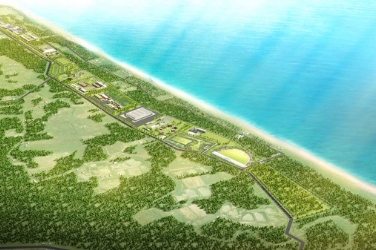
In collaboration with Landscape Architects 49, we have extensive experience in master planning and urban design. We have worked for both government and private sectors from large urban development to planning of new university campus.